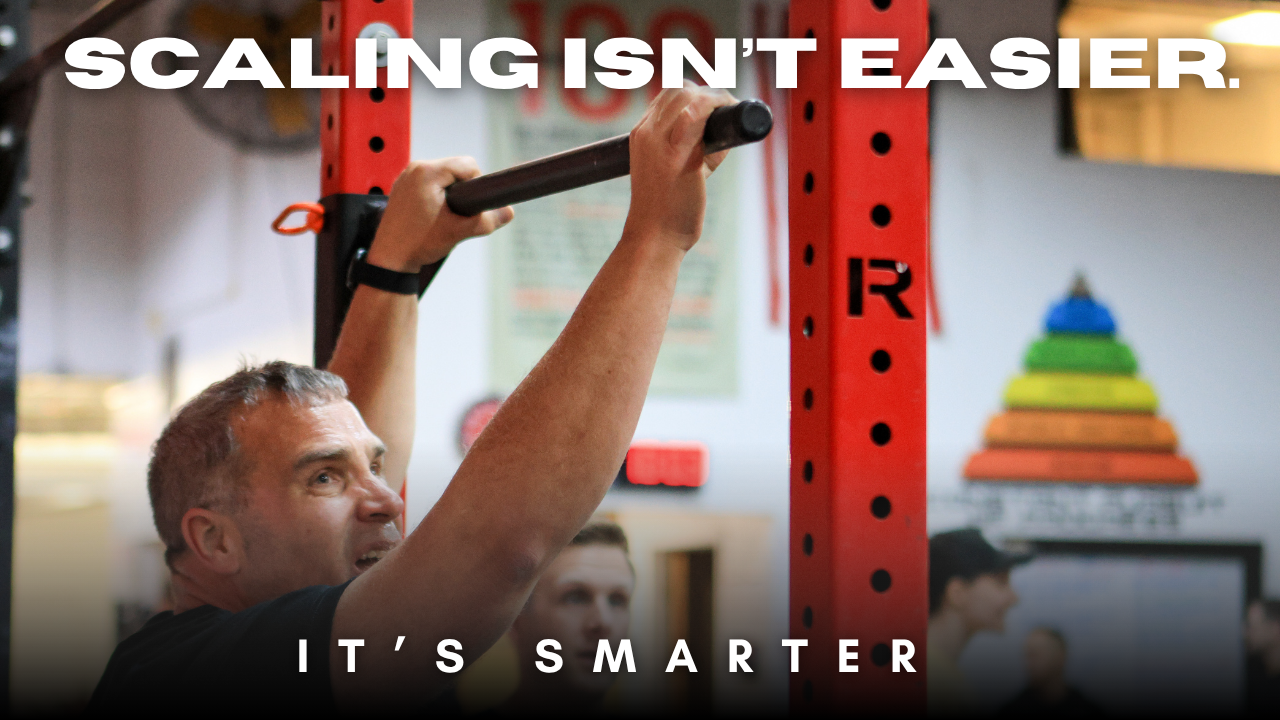
Scaling Isn’t Easier. It’s Smarter
Scaling isn't about making the workout easier.
It's about meeting you where you're at.
In fact, when it's done correctly, scaling is rarely easier.
Sometimes the easy route is loading the bar too heavy so you have an excuse to move slower.
Sometimes the easy route is going so light that you never have to break a set or feel uncomfortable.
But scaling because of an injury, a limitation, or your current fitness level? When it's programmed correctly, that's often the harder option.
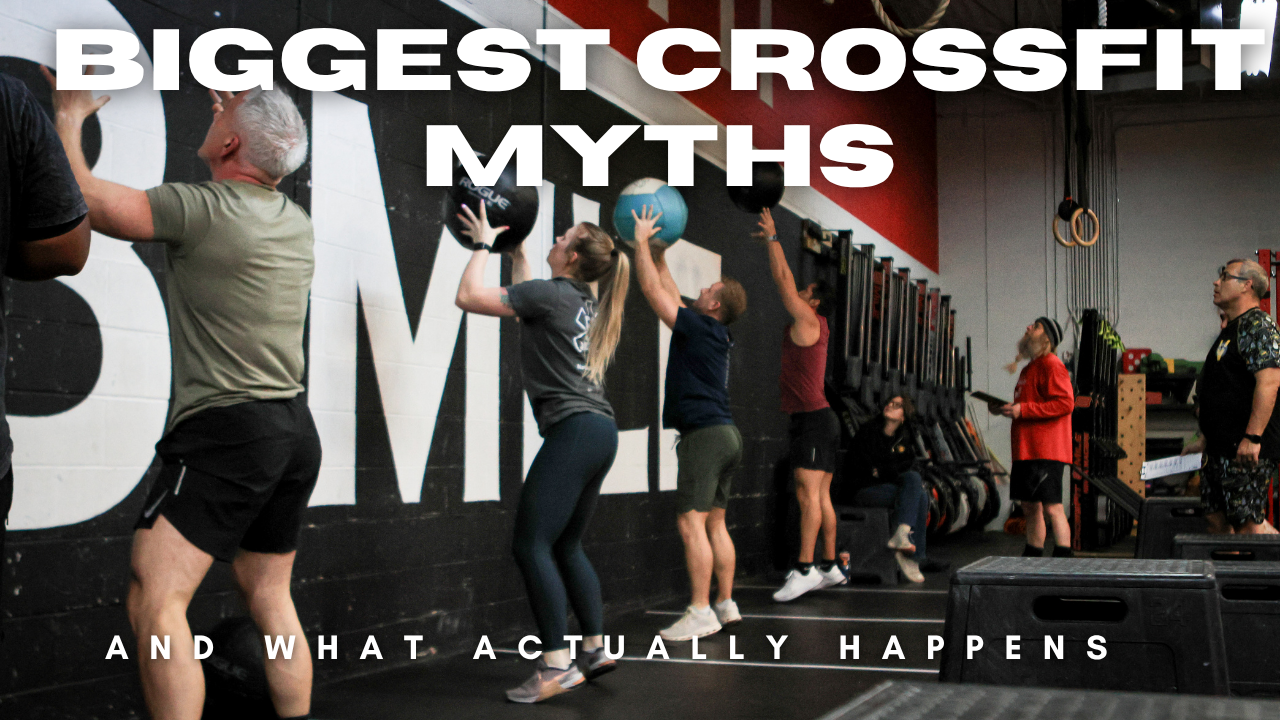
You may hate wall balls... until the coach tells you to do jump squats instead. Suddenly, wall balls don't seem so bad.
Why?
Because good scaling preserves the workout's intention.
It keeps the intensity where it belongs.
The right scaling choice often increases speed, raises your heart rate, demands better movement quality, recruits more muscle, and forces you to work harder than simply grinding through a weight you can't move efficiently.
I can happily say I haven't heard someone say, "I'm just working on technique today," in years.
Good.
Because technique should always be something we're working on.
Using a barbell that's too heavy isn't practicing technique. More often than not, it's either poor coaching or a convenient excuse to avoid moving fast enough for the workout to have its intended effect.
On the flip side, going too light isn't the answer either.
Sometimes that's fear talking.
You know the correct weight will require you to push harder, breathe harder, and embrace a level of discomfort you'd rather avoid.
That's why I don't really think of scaling as "scaling."
I think of it as matching the intention.
Working out is hard.
CrossFit is hard.
More accurately, producing real changes in your body and your mind requires discomfort.
That discomfort isn't always enjoyable, but every athlete who's been around long enough knows something:
There's a payoff.
Nobody can tell you exactly when you'll reach it, but it's always waiting for those willing to keep showing up.
Forcing yourself to use the RX weight isn't a fast pass to getting there. In many cases, it's actually slowing your progress.
One of the biggest concepts we coach is economy of movement—the ability to move efficiently while producing the greatest amount of work.
MetCons are built around submaximal loads, not maximal ones.
The goal isn't to lift the most weight possible.
The goal is to find the optimal weight.
Optimal means you can maintain sound mechanics while moving with intensity.
That's why you'll hear coaches say things like:
- "You should be able to do the first round unbroken."
- "You should consistently hit sets of three."
- "This should feel challenging, but sustainable."
Those aren't random suggestions.
They're the roadmap to finding the right stimulus.
So don't apologize by saying, "I scaled," as if your workout somehow counts less.
You already know the truth.
You know if you avoided the challenge.
And you know if you honestly pushed yourself right up to your personal edge.
That's where progress lives.
Scaling done wrong is a cop-out.
Scaling done right is maturity.
It's confidence.
It's discipline.
It's trusting the process instead of your ego.
And if you're not sure where that line is, that's exactly why your coach is standing there.
Let them coach.
Then go attack the workout.
Nick Carignan
CrossFit 8 Mile